Book
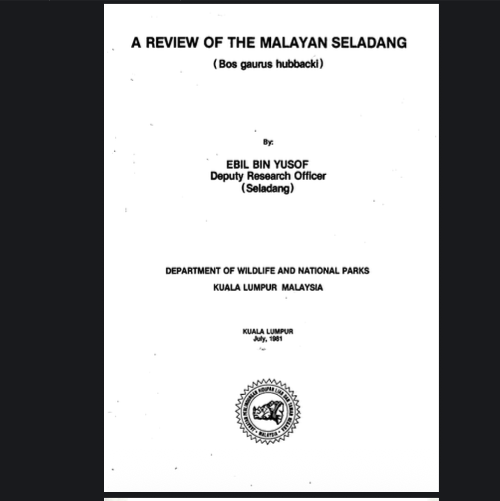
This 1981 report by Ebil bin Yusof details the biology, ecology, and conservation status of the endangered Malayan Seladang (Bos gaurus hubbacki). Standing up to 2.11 meters tall and weighing approximately 900 kg, mature bulls are characterized by prominent dorsal ridges and distinctive white stockings.
With the total population estimated at 472 animals, the species strongly prefers undulating lowland Dipterocarp and riverine forests below 1,000 feet, with the largest concentration tracked in Ulu Lepar, Pahang. As wide-spectrum generalist herbivores, seladangs graze and browse on various grasses, shrubs, and legumes. Their seasonal herd movements are primarily directed by the placement of mineral-rich natural salt licks.
Critical threats facing their survival include rapid habitat reduction due to agricultural conversion, tiger predation on isolated calves, and fatal chemical poisoning from plantation weed control methods like sodium arsenite.
To counter these steep declines, the Department of Wildlife and National Parks implements protective management strategies. These initiatives encompass strategically placed boundary ranger posts, high-gain and aerial radio-telemetry tracking, and artificially cultivated Setaria nandi grass pastures. Finally, captive domestication projects aim to tame wild stock and explore crossbreeding with domestic cattle to substantially optimize tropical meat production.